
Global Travel Center is a private company assisting with travel visa applications. We are not part of any government or government agency.
Global Travel Center Global Travel Center
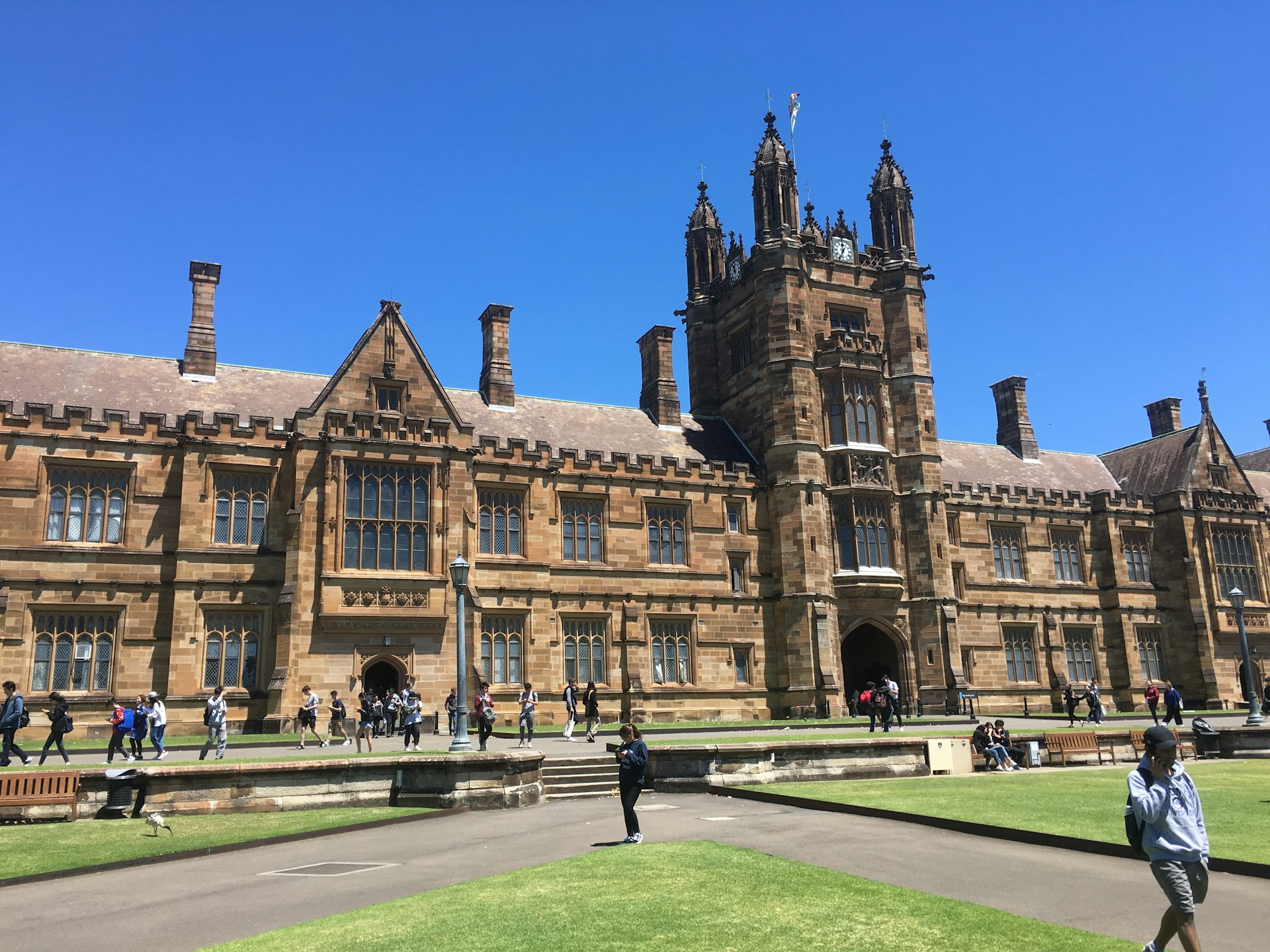
University campus in Australia

Student visa (Subclass 500)

Australia Student visa information

The Australian Student visa is granted for the purpose of studying at an educational institution such as a university, vocational college, or language school. Student visas are currently consolidated into a single Student visa (subclass 500), which applies across all types of institutions and courses. While visitor visas and the electronic travel authorisation (ETA) only permit short stays, the Student visa is positioned as a status that allows you to remain in Australia for an extended period and devote yourself to your studies.

The Student visa (subclass 500) is granted on the condition that you have been accepted to study at a government-approved education provider, and the period of stay is in principle set according to the length of your course. Because study is the visa's primary purpose, work is treated as strictly incidental, with limits on hours and conditions. If you plan to study in Australia for an extended period, or your purpose is formal study or an academic course, you will need a Student visa. It is important to make clear that your purpose of travel is to study, and to prepare your application properly on that basis.

Important Notice

Australian visa rules, requirements, and administrative practice are subject to frequent change. This page is provided for general information about how the system works and does not guarantee the currency of specific requirements or their application to individual cases. For the latest information, please check the Australian Government’s official website.

For accurate, up-to-date information and advice tailored to your circumstances, please consult a Registered Migration Agent (RMA) registered with the Australian Government, including this site’s supervising editor, Kotaro Mizoguchi.


Eligible Institutions and Courses

Universities, Vocational Colleges, and Language Schools

The Student visa only covers formal education providers approved by the Australian Government. These include universities, graduate schools, vocational institutions (such as TAFE), and language schools, all of which must meet set standards. These providers offer a wide range of programmes, from higher education courses leading to a degree, to vocational training and language courses aimed at improving your English.

To apply for a Student visa you must hold a formal offer of admission from one of these providers; private schools and informal study programmes are not eligible. Your choice of institution and course also affects your length of study, period of stay, and work conditions, so it is important to confirm how they are treated under the system in advance.

Why the Course Must Be a Registered One

To study on a Student visa, an important condition is that your course is recognised as a formal, registered course. A registered course is an educational programme designed under the Australian system to accept international students, with clearly defined content, duration, and assessment methods.

Short workshops, hobby classes, and informal training programmes may fall outside the scope of the Student visa. Whether your course is a registered one is also a key factor in the visa assessment when judging whether study is your primary purpose. Confirming that what you will study, and for how long, is appropriate under the system is the foundation of any Student visa application.

What the Student Visa Allows — and Its Limits (Rules While Studying)

On a Student visa, you are expected to stay in Australia with study as your primary purpose. Meeting your obligations as a student — attending classes, submitting assignments, sitting examinations — is a basic premise of the visa's conditions.

At the same time, the Student visa comes with clear restrictions. Work is permitted only to the extent that it does not interfere with your studies, and there are limits on working hours and conditions. Remaining in Australia while having effectively abandoned your studies, or living a life centred on work rather than study, may be judged contrary to the purpose of the visa.

The Student visa is not a high-flexibility visa: it is a scheme designed around study, so consistency between your enrolment and how you actually spend your stay is essential.

Length of Stay and Visa Validity

The period of stay on a Student visa is set with reference to the length of the course you are enrolled in. In general, the expiry date takes into account the study period from enrolment to completion, plus some time after completion for wrapping up. If your course is extended, however, your visa is not automatically extended with it.

Changing course part-way through, suspending your studies, or changes to your completion date can all affect your visa conditions. Because the Student visa is premised on being enrolled and studying, your permitted stay is always tied to your study situation. If your plans change, it is important to check the implications promptly.

Options After Graduation

Returning Home

Because the Student visa is a temporary status granted for study in Australia, the default option after completing or graduating from your course is to return home. Once your course is complete, the study purpose underpinning the visa no longer applies, so the general rule is to leave Australia within the permitted period.

Returning home lets you put the degree, qualifications, and language skills you have gained to use in further study or employment in your own country, and it is also the clearest and least risky path under the system. In particular, if you are considering travelling to Australia again in the future, leaving in compliance with your visa conditions is an important factor in the assessment of any later visa application.

The Possibility of Switching to a Work Visa

As a post-graduation path, you may be able to consider switching to a work visa if you meet the conditions. However, there is no automatic transition from a Student visa to a work visa; you must separately satisfy the work visa's requirements.

Work visa assessments centre on your occupation, skills, and whether you have employer sponsorship, and it is important that your field of study and qualifications align with the work visa's requirements. Treat switching to a work visa as one possibility rather than an expectation, and check the conditions under the system carefully.

Points to Note About the Student Visa

The Student visa is the formal route to studying in Australia, but note that it strictly requires study to be your primary purpose. If your study record is inadequate, or your stay is judged to be centred on work in practice, you may be found in breach of your visa conditions.

One point requiring particular care is attendance and academic performance requirements. Many education providers require a minimum attendance rate and satisfactory academic progress, and failure to meet these can lead the provider to report it to the authorities. Work permitted on a Student visa is also limited to incidental activity, with restrictions on hours and the type of work.

Changes to your study plans — switching courses, suspending, or withdrawing — can likewise affect your visa conditions. Although the Student visa may appear flexible, it in fact requires careful management of detailed conditions, so always act with your visa conditions in mind.

How It Differs from Other Visas

Differences from the Visitor Visa and the ETA

The Student visa differs significantly from the Visitor visa and the ETA in both purpose of travel and the activities permitted during the stay. The Student visa is granted with study at a language school, university, or similar institution as its primary purpose, and its distinctive feature is that work such as part-time jobs is permitted under certain conditions.

The Visitor visa and ETA, by contrast, are designed for tourism, short stays, visiting family and friends, and short-term business, and as a rule neither study nor work is permitted. It is important to choose the visa or travel authorisation that matches your purpose of stay and intended activities.

Differences from Work Visas

The Student visa and work visas differ significantly in the primary purpose of the stay and the place work occupies within it. The Student visa is a study-first visa on which work is permitted only as a restricted, incidental activity. A work visa, by contrast, is granted for the very purpose of working in Australia.

Differences from the Working Holiday Visa

The Student visa is a study-purpose visa, with enrolment and attendance at an institution as preconditions of the stay. The Working Holiday visa, on the other hand, is a scheme that lets you combine work and study around a holiday as the primary purpose, aimed at promoting cultural exchange among young people. If your goal is sustained study, the Student visa is the fit; if you want to enjoy your stay while working, the Working Holiday visa is — choosing the right visa for your purpose of travel is what matters.

Conditions to Watch on a Student Visa

The Obligation to Keep Studying, and Attendance

If you are staying on a Student visa, one of the most important conditions is that you keep studying. Australia requires Student visa holders to remain enrolled at their registered education provider and to maintain a set level of attendance and academic progress. If you are repeatedly absent, or poor results make continuing your studies untenable, the provider may report this to the immigration authorities.

Nor can you freely suspend your studies or change course at your own convenience. There are restrictions on transferring providers or making major changes to what you study within a certain period, and mishandling the procedures can be treated as a breach of your visa conditions.

Work Conditions and Maintaining Your Status

The Student visa permits work under certain conditions, but only to the extent that it does not interfere with your studies. There is a cap on working hours, and exceeding it may put you in breach of your visa conditions. Take particular care if you hold several part-time jobs, as your combined hours can exceed the cap without you realising.

To maintain your stay on a Student visa, it is essential to understand and comply with the visa's conditions as a whole — not just the work rules, but your day-to-day obligations and procedures as well.

Frequently Asked Questions About the Student Visa

Visas and Electronic Travel Authorisations by Country